
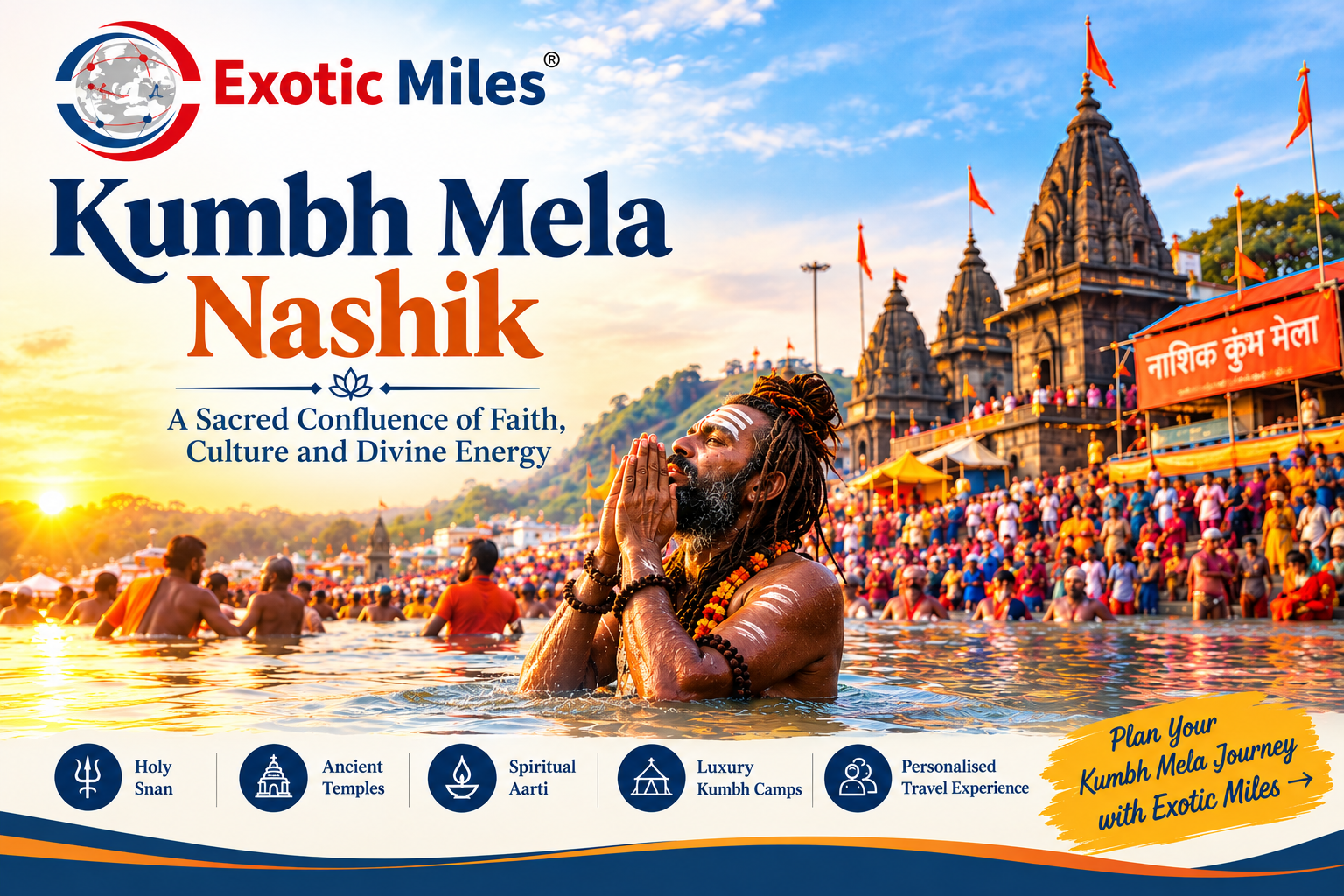
Kumbh Mela Nashik: A Spiritual Journey of Faith, Culture and Tradition

Religious Importance of Nashik Kumbh Mela
The religious significance of the Kumbh Mela is connected with ancient Hindu traditions and the mythology surrounding the sacred nectar of immortality, known as Amrita.
Nashik and Trimbakeshwar hold a special position in these traditions. The Godavari River is regarded as sacred, and pilgrims visit the region to participate in prayers, rituals, and holy bathing.
For many devotees, attending the Kumbh Mela is more than a journey to a religious festival. It is an opportunity for spiritual reflection, devotion, and participation in an ancient cultural tradition.
Holy Bathing at the Kumbh Mela
One of the most recognizable aspects of the Kumbh Mela is the holy bathing ritual. Devotees gather at designated river ghats and participate in bathing as part of their religious observances.
Important bathing days can attract exceptionally large crowds. Pilgrims often plan their journeys carefully to participate in these occasions while following local administration and safety guidelines.
Visitors should check official announcements regarding bathing dates, access arrangements, transportation, and crowd-management measures before travelling.
Trimbakeshwar and Its Spiritual Significance
Trimbakeshwar, located near Nashik, is an important pilgrimage destination associated with the Kumbh Mela. The town is home to the famous Trimbakeshwar Jyotirlinga Temple, one of the twelve Jyotirlinga temples traditionally revered in Hinduism.
During the Kumbh period, Trimbakeshwar becomes an important centre for religious activities and spiritual gatherings. Visitors can explore the area's temples, traditional architecture, and peaceful surroundings while learning about its cultural heritage.
What Can Visitors Experience?
A journey to the Kumbh Mela Nashik can include much more than attending religious ceremonies. Visitors may experience:
- Sacred bathing rituals
- Temple visits and prayers
- Spiritual discourses
- Akharas and traditional ascetic communities
- Religious processions
- Cultural performances
- Local food and traditions
- Interactions with pilgrims and spiritual seekers
- Visits to historic places around Nashik and Trimbakeshwar
The combination of spirituality, culture, tradition, and community makes the Kumbh Mela a distinctive travel experience.
Best Way to Plan a Kumbh Mela Nashik Trip
Planning ahead is important because large numbers of pilgrims travel to Nashik during the Kumbh Mela. Accommodation and transportation can become busy during important festival dates.
Travellers should consider the following:
Book Accommodation Early
Hotels, guesthouses, dharamshalas, and other accommodation options can experience high demand. Booking early can make the trip more convenient.
Plan Transportation
Nashik is well connected by road and rail, while nearby airports provide additional travel options. During major festival periods, travellers should allow extra time for traffic and crowd-management arrangements.
Follow Local Guidelines
Large religious gatherings require careful crowd management. Visitors should follow instructions from local authorities and organizers, especially around bathing areas and major processions.
Carry Essential Items
Comfortable clothing, walking shoes, drinking water, basic medicines, identification documents, and necessary travel items can make the pilgrimage easier.
Places to Visit Around Nashik
Visitors travelling for the Kumbh Mela can also explore several attractions in and around Nashik, depending on their itinerary.
Popular places include:
- Trimbakeshwar Temple
- Panchavati
- Ram Kund
- Sita Gufa
- Kalaram Temple
- Godavari River ghats
- Anjaneri Hills
- Sula Vineyards and surrounding attractions
These destinations provide opportunities to explore Nashik's religious, historical, natural, and cultural heritage.
Why Visit Kumbh Mela Nashik?
The Kumbh Mela represents a remarkable combination of faith and culture. For pilgrims, it can be a deeply meaningful spiritual experience. For travellers interested in Indian heritage, it provides an opportunity to observe centuries-old traditions and meet people from different regions.
The scale of the gathering also makes it a unique cultural experience. From religious ceremonies and processions to traditional communities and local customs, every part of the event contributes to the atmosphere of the pilgrimage.
Conclusion
Kumbh Mela Nashik is an important religious and cultural gathering that showcases India's enduring traditions of pilgrimage, spirituality, and community. With its connection to the sacred Godavari River, Trimbakeshwar, temples, saints, and traditional rituals, Nashik offers a memorable destination for those interested in India's spiritual heritage.
Whether travelling as a pilgrim or exploring Indian culture, visitors should plan their journey carefully, stay informed about official arrangements, and respect local religious customs. A well-planned trip can make the experience of visiting Nashik during the Kumbh Mela both comfortable and meaningful.
Frequently Asked Questions
What is Kumbh Mela Nashik?
Kumbh Mela Nashik is one of the four major Kumbh Mela pilgrimage gatherings in India and is associated with Nashik and Trimbakeshwar in Maharashtra.
Where is Kumbh Mela held in Nashik?
Major religious activities are associated with Nashik and Trimbakeshwar, including sacred river areas and important pilgrimage sites.
Why is Nashik important for Kumbh Mela?
Nashik has religious significance because of its association with the sacred Godavari River and the pilgrimage centre of Trimbakeshwar.
What should I consider before visiting?
Travellers should plan accommodation and transportation in advance, check official festival updates, and follow local safety and crowd-management instructions.
Which places can I visit around Nashik?
Trimbakeshwar Temple, Panchavati, Ram Kund, Sita Gufa, Kalaram Temple, and other local attractions can be included depending on your itinerary.